

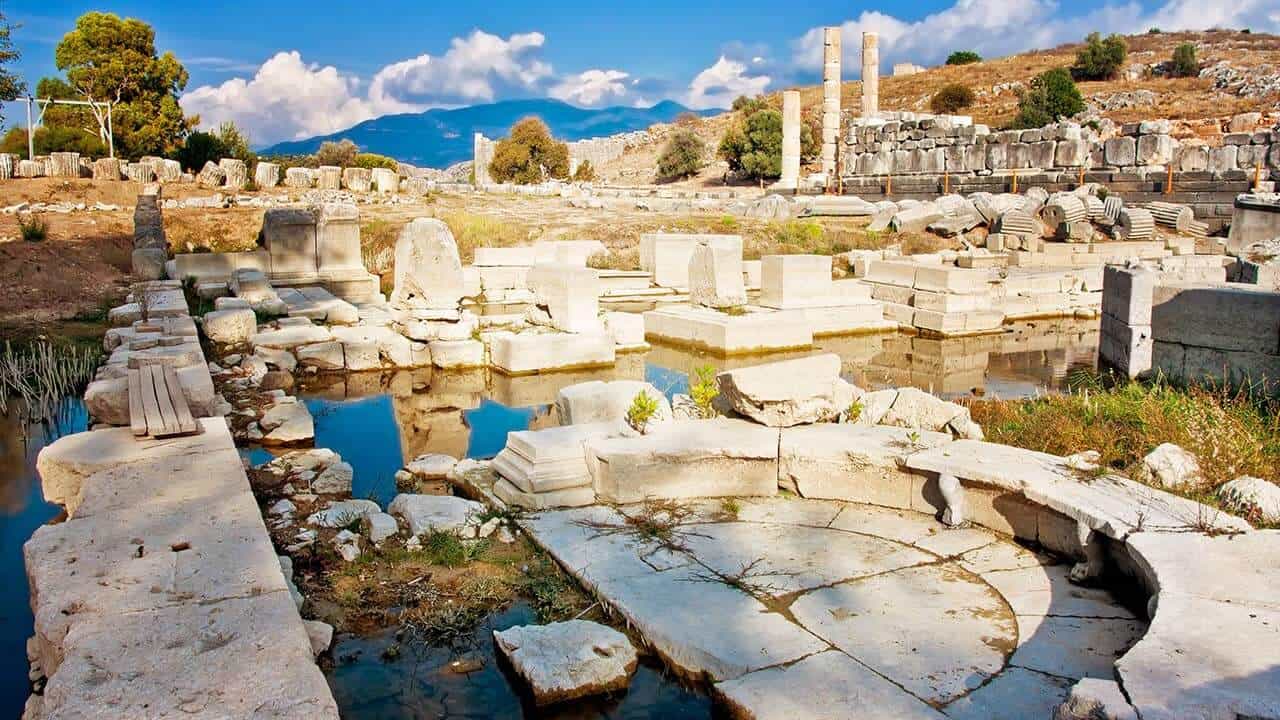
Located in the fertile Eşen River Plain at the intersection of the Antalya and Muğla borders, the Ancient City of Xanthos is one of the most dramatic and impressive ancient settlements of Anatolia. As the capital of the Lycian League, Xanthos deeply affects its visitors not only with its architecture but also with its struggle for freedom, stories of resistance, and deep-rooted history. Included on the UNESCO World Heritage List, this ancient city is a unique open-air museum that carries the traces of the past into the present day.
The Story and History of the Ancient City of Xanthos
The history of the Ancient City of Xanthos dates back to the 8th century BC and it is regarded as the political, cultural, and religious center of the Lycian civilization. According to ancient sources, the people of Xanthos were known for their devotion to freedom. One of the most striking aspects of the city is that it is remembered for two collective acts of resistance and sacrifice throughout history.
The first major destruction occurred in 545 BC during the attack of the Persian commander Harpagos. Rather than surrender, the people of Xanthos set their city on fire and sacrificed their women, children, and themselves; only a few survived. This event was recorded as one of the most dramatic struggles for freedom in the ancient world. The second major act of resistance took place during the Roman period, when Brutus attacked the city, and once again the inhabitants chose death over surrender.
Rebuilt over time, Xanthos maintained its importance during the Persian, Hellenistic, Roman, and Byzantine periods. The city experienced significant development especially during the Roman era, when it was equipped with monumental structures, a theater, and religious areas. Being the administrative center of the Lycian League made Xanthos an important city not only locally but also on a regional scale.
Where Is the Ancient City of Xanthos? Directions
The Ancient City of Xanthos is located within the borders of Kınık Neighborhood in the Kaş district of Antalya. Situated on the D400 highway between Fethiye and Kaş, the ancient city has a very convenient location in terms of transportation. It is approximately 45 kilometers from Fethiye and about 20 kilometers from Kaş.
Visitors traveling by private car can follow the signs to Kınık via the D400 highway. Along the way, the fertile lands of the Eşen Plain and mountain views accompany the journey. For those who prefer public transportation, Fethiye–Kaş minibuses pass near Kınık; however, a short walk may be required to reach the ancient city. Thanks to its location, Xanthos can easily be visited on the same day together with the Ancient City of Letoon.
Entrance Fee to the Ancient City of Xanthos
The Ancient City of Xanthos is one of the archaeological sites affiliated with the Ministry of Culture and Tourism, and entrance is subject to a fee. Since current entrance fees may vary periodically, it is recommended to check official sources before visiting. Visitors who hold a Museum Pass (Müze Kart) can enter the Ancient City of Xanthos free of charge. In this respect, the Museum Pass is highly advantageous for those who wish to explore the ancient cities in the region.
The ancient city is generally open to visitors from early morning until sunset. As temperatures can be quite high during the summer months, visiting in the early morning or late afternoon hours is both more comfortable and more enjoyable for photography.
What Is There in the Ancient City of Xanthos?
With its structures spread over a wide area, the Ancient City of Xanthos offers visitors a rich exploration experience. While walking through the city, it is possible to see traces from the Lycian, Roman, and Byzantine periods together.
Lycian Tombs and Monuments
One of the most remarkable elements of Xanthos is the rock-cut tombs and monumental tombs unique to the Lycian civilization. In particular, the Harpy Monument and the Lion Tomb are among the symbols of the ancient city. These monuments reflect some of the finest examples of Lycian art and funerary culture. Some of the original reliefs are currently exhibited at the British Museum.
Ancient Theater
The ancient theater, built during the Roman period, was one of the centers of the city’s social and cultural life. Positioned against a hillside, the theater offers visitors an impressive experience both architecturally and in terms of its view. Partially standing today, this structure reveals the importance of performances and gatherings held in ancient times.
Agora and Public Buildings
The agora in Xanthos was the heart of the city’s commercial and social life. The surrounding public buildings, colonnaded galleries, and administrative areas demonstrate that the city had an organized urban plan. While walking through these areas, it is quite easy to imagine daily life in ancient times.
Acropolis and Defensive Structures
The acropolis, located at the highest point of the ancient city, held strategic importance both for defense and administration. From here, it is possible to observe the Eşen Plain and the surrounding area panoramically. The remains of the fortification walls around the acropolis clearly reveal why Xanthos was such an important settlement throughout history.
Byzantine Period Remains
Following the Roman period, Xanthos continued to exist during the Byzantine era. The church ruins and religious structures within the city provide important clues about the spread of Christianity in the region. These structures are of great significance for understanding the multilayered history of Xanthos.
Things to Know When Visiting the Ancient City of Xanthos
Since the Ancient City of Xanthos spreads across a large area, it is important to wear comfortable, non-slip shoes during your visit. Especially in the summer months, as temperatures in the region can be quite high, bringing a hat, sunscreen, and sufficient water will help ensure a comfortable and healthy trip. As the walking paths within the ancient city can be uneven in places, it is also advisable to move carefully and adjust your pace accordingly.
Informational signboards within the ancient city provide basic guidance about the structures and ruins, making them sufficient for individual visits. However, considering Xanthos’ historical importance, its place in the Lycian civilization, and the dramatic events that took place there, guided tours with a professional guide offer a much deeper and more meaningful experience. Through guided tours, it is possible to gain detailed information about the symbolic meanings of the monuments, the city’s defensive strategies, and its social life.
A Journey into the Depths of History in Xanthos
The Ancient City of Xanthos is not merely composed of stone structures and ruins; it embodies the struggle for freedom, the spirit of resistance, and the traces of a civilization thousands of years old. As the capital of Lycia, this ancient city holds an important place in history and is one of the must-see destinations for culture and history enthusiasts. If your route takes you along the Fethiye–Kaş line, spending a few hours at the Ancient City of Xanthos will offer you an unforgettable journey into the depths of the past.